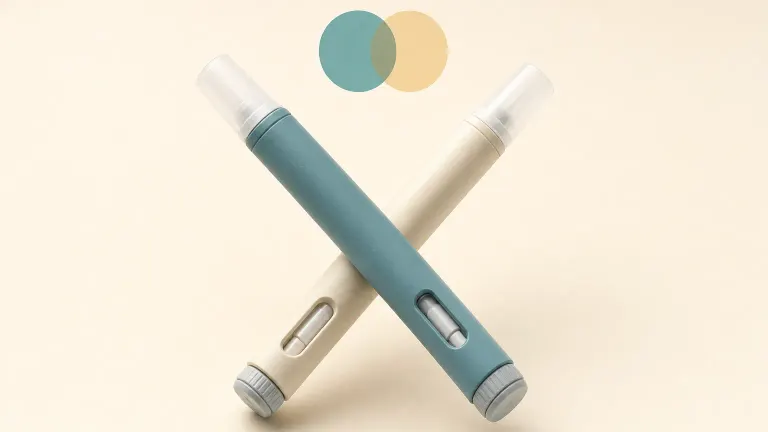
Pramlintide is a synthetic version of amylin, a hormone the pancreas releases along with insulin after meals. Sold as Symlin, it was approved by the FDA in 2005 as an add-on to mealtime insulin for type 1 and type 2 diabetes, making it the first amylin drug.[2][1] It modestly lowered blood sugar and weight, but all Symlin products are now listed as discontinued in the US.[2][3]
This profile covers pramlintide’s mechanism of action, its uses, trial results, weight effects and risks, and how it paved the way for newer amylin drugs like cagrilintide.
What is pramlintide?
Amylin was discovered in 1986. People with diabetes make too little of both insulin and amylin after meals.[1][11] Human amylin clumps easily, so pramlintide was modeled on a non-clumping form of rat amylin to make it usable as a drug.[12]
Pramlintide mechanism of action
According to the FDA label, pramlintide works in three ways:[1]
- Slows stomach emptying, so sugar from food enters the blood more gradually, without reducing how much is absorbed overall.
- Suppresses glucagon after meals, a hormone that raises blood sugar and that insulin alone does not normalize.
- Increases fullness through the brain: single doses before a buffet meal cut calorie intake by about 21% to 23%.
Amylin acts mainly on brain areas outside the blood-brain barrier, through receptors that combine a calcitonin receptor with partner proteins.[4]
Pramlintide results: what the research shows
- Type 1 diabetes: in a one-year trial in 651 adults, HbA1c fell 0.29 to 0.34 points versus 0.04 on placebo, while weight fell slightly instead of rising.[5] A meta-analysis of 10 trials confirmed lower HbA1c, insulin doses and weight.[9]
- Type 2 diabetes: added to basal insulin, it lowered HbA1c by 0.70 versus 0.36 points over 16 weeks.[6] In overweight insulin-treated patients, it lowered weight by 1.8 kg more than placebo.[7]
- Obesity without diabetes: with lifestyle changes, placebo-corrected weight loss was 6.1 to 7.2 kg over 12 months.[8]
A closer look at two trials
The one-year type 1 trial enrolled 651 adults with an average age of 41 and a starting HbA1c of 8.9%. They added 60 mcg of pramlintide three or four times a day, or placebo, to their insulin. About three times as many people on pramlintide reached an HbA1c below 7%, without needing more insulin. The most common side effect was nausea, which was usually mild to moderate and passed with time.[5]
The type 2 trial enrolled 212 adults already using insulin glargine, a long-acting insulin. After 16 weeks, 25% on pramlintide met a combined goal of good HbA1c, smaller after-meal spikes, no weight gain and no severe low blood sugar, versus 7% on placebo. After-meal glucose rises shrank by about 24 mg/dL on pramlintide, versus almost no change on placebo, and no treatment-related severe hypoglycemia occurred.[6]
The American Diabetes Association’s 2026 standards describe pramlintide’s effect as a modest HbA1c reduction of 0.3 to 0.4 points and weight loss of about 1 to 2 kg.[10]
Pramlintide side effects and risks
- Boxed warning: using pramlintide with insulin raises the risk of severe low blood sugar, particularly in type 1 diabetes, usually within 3 hours of an injection.[1]
- Nausea was very common: 48% versus 17% on placebo in type 1 diabetes, and 28% versus 12% in type 2.[1]
- Other effects: loss of appetite, vomiting and headache.[1]
- Who should not use it: people with hypoglycemia unawareness or gastroparesis (slow stomach emptying).[1]
Who was a candidate
The label stressed careful patient selection. Pramlintide was meant for people whose diabetes stayed poorly controlled despite well-managed insulin, under the care of a team experienced with insulin and supported by diabetes educators. The label said it should not be considered for people who:[1]
- had an HbA1c above 9%
- had severe low blood sugar needing help from someone else in the past 6 months
- did not reliably follow their insulin plan or check their blood sugar
- needed drugs that speed up the gut
- were children
Drug interactions and pregnancy
- Timing-sensitive pills: because pramlintide slows stomach emptying, drugs whose quick action matters, such as pain relievers, antibiotics and birth control pills, were taken at least 1 hour before or 2 hours after the injection.[1]
- Gut-slowing drugs: it was not considered for people taking anticholinergic drugs or alpha-glucosidase inhibitors (such as acarbose).[1]
- Masked warning signs: beta-blockers and some other drugs can blunt the early symptoms of low blood sugar.[1]
- Pregnancy: human data were too limited to judge the risk. Lab studies of placentas suggested little of the drug crosses to the fetus.[1]
Pramlintide dosage
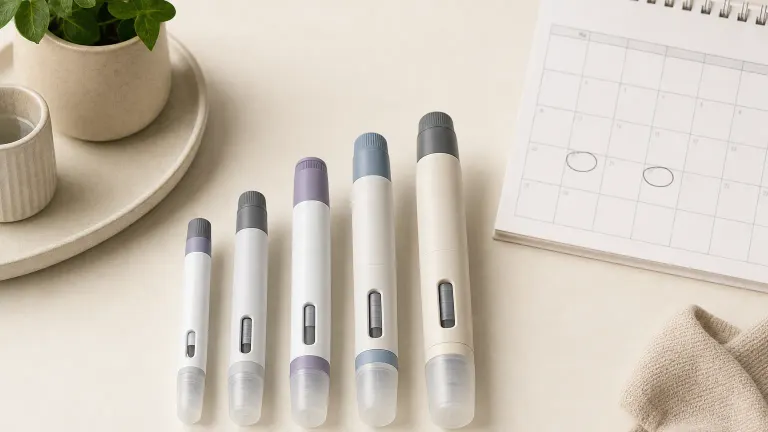
From the FDA label:[1]
| Patient | Starting dose | Target dose |
|---|---|---|
| Type 2 diabetes | 60 mcg before major meals | 120 mcg |
| Type 1 diabetes | 15 mcg before major meals | 30, 45 or 60 mcg |
Mealtime insulin was reduced by 50% when starting, doses were increased no faster than every 3 days, and it was only used before meals with at least 250 calories or 30 grams of carbohydrate. It was never mixed with insulin in the same syringe.[1][13]
It was injected into the abdomen or thigh, not the arm, because absorption from the arm was variable. A missed dose was skipped, and the usual amount was taken before the next major meal. The label advised stopping it after repeated unexplained low blood sugar needing medical help, or persistent nausea. After any break, such as surgery or illness, it was restarted with the same starting steps.[1]
Pramlintide vs newer amylin drugs
| Pramlintide (Symlin) | Cagrilintide | |
|---|---|---|
| Dosing | Before each meal[1] | Once weekly |
| Half-life | Under 1 hour[1] | Long-acting |
| Status | Approved 2005, now discontinued in the US[2] | In phase 3 trials |
What users report
Is pramlintide still available?
FDA lists all Symlin products as discontinued, and MedlinePlus notes it has been discontinued in the US.[2][3]