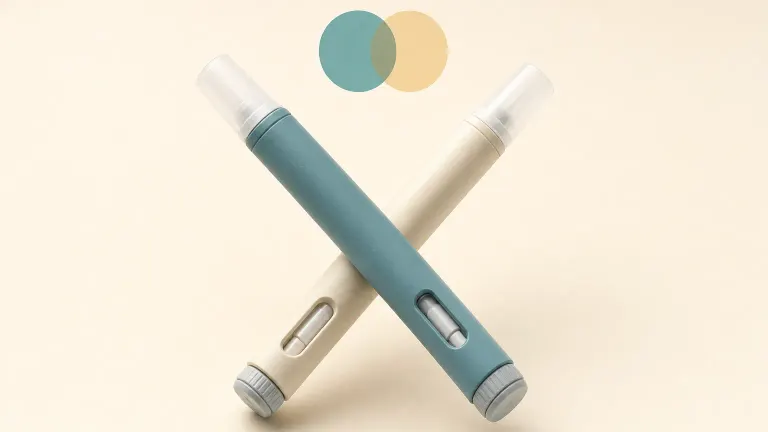
Liraglutide is a once-daily GLP-1 drug from Novo Nordisk. It was FDA-approved as Victoza for type 2 diabetes in 2010 and as Saxenda for weight management in 2014.[3][2] In the main weight trial, people on Saxenda lost 8.4 kg over a year versus 2.8 kg on placebo,[5] and in diabetes it lowered heart attack, stroke and cardiovascular death.[4] Generic liraglutide has been available since December 2024.[9]
What is liraglutide?
Liraglutide is 97% identical to the body’s own GLP-1 hormone, with a fatty acid attached so it binds albumin and lasts about 13 hours instead of 2 minutes.[1] It was designed at Novo Nordisk in Denmark and later led to semaglutide.[8]
FDA approvals and uses
- Victoza: type 2 diabetes in adults (2010), reducing major cardiovascular events in adults with type 2 diabetes and heart disease (2017), and children aged 10 and older.[3][1]
- Saxenda: chronic weight management in adults (2014) and adolescents aged 12 and older weighing more than 60 kg (2020).[2]
- Generics: the first generic referencing Victoza was approved in December 2024 and the first referencing Saxenda in August 2025.[9][10]
Liraglutide results
- Weight loss (SCALE): 8.4 kg versus 2.8 kg over 56 weeks; 33.1% lost more than 10% versus 10.6%.[5]
- Heart protection (LEADER): in 9,340 people with type 2 diabetes, major cardiovascular events fell from 14.9% to 13.0%, and deaths from any cause were lower.[4]
- Teens (SCALE Teens): 43.3% of adolescents reduced BMI by at least 5% versus 18.7%, but BMI rose again after stopping.[6]
- Children with type 2 diabetes: HbA1c fell 1.06 points more than placebo at 26 weeks.[7]
Inside the SCALE weight trial
SCALE enrolled 3,731 adults without diabetes who had a BMI of 30 or more, or 27 or more with high cholesterol or high blood pressure. Their average starting weight was 106.2 kg, and 61.2% had prediabetes. Everyone received lifestyle counseling. The most common side effects on liraglutide were mild or moderate nausea and diarrhea, and serious adverse events occurred in 6.2% versus 5.0% on placebo.[5]
Inside the LEADER heart trial
LEADER compared liraglutide with placebo, added to usual care, in people with type 2 diabetes at high cardiovascular risk, over a median of 3.8 years. The risk of heart attack, stroke or cardiovascular death was 13% lower (hazard ratio 0.87). Cardiovascular deaths fell from 6.0% to 4.7%, and deaths from any cause fell from 9.6% to 8.2%. Nonfatal heart attacks, nonfatal strokes and heart failure hospitalizations were also lower, but those differences were not statistically significant.[4]
Liraglutide vs semaglutide and tirzepatide
| Liraglutide (Saxenda) | Semaglutide (Wegovy) | Tirzepatide (Zepbound) | |
|---|---|---|---|
| Dosing | Daily injection[2] | Weekly injection | Weekly injection |
| Main weight trial | −8.4 kg at 56 weeks[5] | −14.9% at 68 weeks | −20.9% at 72 weeks |
| Generic available | Yes[9] | No | No |
Comparing separate trials is unreliable, but the weekly drugs have produced more weight loss.
Liraglutide side effects
From the Saxenda label (adults):[2]
| Side effect | Saxenda | Placebo |
|---|---|---|
| Nausea | 39.3% | 13.8% |
| Diarrhea | 20.9% | 9.9% |
| Constipation | 19.4% | 8.5% |
| Vomiting | 15.7% | 3.9% |
- Boxed warning: thyroid C-cell tumors in rodents; not for people with a personal or family history of medullary thyroid cancer or MEN 2.[1]
- Other warnings: pancreatitis, gallbladder disease, kidney injury from dehydration, low blood sugar with insulin or sulfonylureas, and a heart rate increase of 2 to 3 beats per minute with Saxenda.[1][2]
- Label update: in February 2026, FDA removed the suicidal behavior warning from the Saxenda label.[2]
Liraglutide dosage
| Product | Dosing |
|---|---|
| Victoza | 0.6 mg daily for 1 week, then 1.2 mg; up to 1.8 mg[1] |
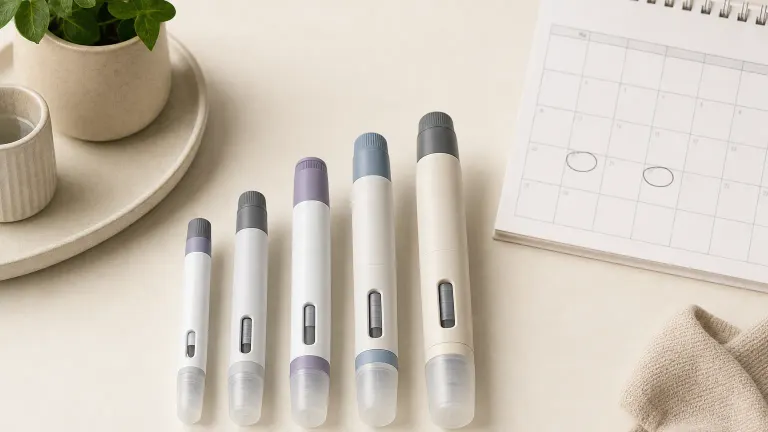
| Saxenda | 0.6 mg daily, increased weekly to 3 mg[2] |
If more than 3 days of Victoza are missed, restart at 0.6 mg.[1] Saxenda follows the same rule: after a gap of more than 3 days, restart at 0.6 mg and step up again.[2]
Saxenda is injected once a day at any time, with or without meals, in the abdomen, thigh or upper arm. For adults, 3 mg is the only maintenance dose; lower doses are for stepping up. The label says to stop Saxenda if an adult cannot tolerate 3 mg, or has not lost at least 4% of starting weight after 16 weeks, because meaningful weight loss is then unlikely. Teens who cannot tolerate 3 mg may drop to 2.4 mg.[2] Your prescriber sets the dose.
Who should not use liraglutide
Liraglutide is not for people with a personal or family history of medullary thyroid carcinoma or multiple endocrine neoplasia type 2 (MEN 2), or who have had a serious allergic reaction to liraglutide or its ingredients.[1][2] Victoza is not for type 1 diabetes and should not be combined with other liraglutide products, such as Saxenda or Xultophy.[1]
Drug interactions and pregnancy
- Oral medicines: liraglutide slows stomach emptying, which may affect how other pills are absorbed. Trials found no clinically important effect on the drugs tested, but the label advises caution.[1][2]
- Insulin and sulfonylureas: doses may need lowering when Victoza is started, to limit low blood sugar.[1]
- Pregnancy: weight loss offers no benefit during pregnancy, so the Saxenda label says to stop it once pregnancy is recognized.[2] Victoza should be used in pregnancy only if the benefit justifies the possible risk to the fetus.[1]
Questions to ask your clinician
- Is generic liraglutide an option for me, and is it covered by my plan?
- How will we decide at 16 weeks whether Saxenda is working?
- Should my insulin or sulfonylurea dose change?
- Would a weekly drug suit me better than a daily injection?
- What should I do if I miss several days?
Shortage, compounding and discontinuation
- Shortage: liraglutide has been on FDA’s shortage list since 2023 and was still listed as current in 2026.[12]
- Saxenda: listed as “To Be Discontinued”, available until January 2027.[12]
- Compounding: in April 2026, FDA proposed excluding liraglutide, semaglutide and tirzepatide from its outsourcing-facility bulks list.[11] The American Diabetes Association recommends against compounded GLP-1 products.[13]
Liraglutide around the world
- China, Korea and India: a trial found liraglutide controlled blood sugar as well as glimepiride with weight loss and far less low blood sugar.[14]
- Russia: Russia’s first domestic liraglutide, Enligria, was shown to be bioequivalent to Saxenda in healthy volunteers and registered in 2023.[15]
What users report
MedlinePlus has patient instructions for using liraglutide pens.[16]