Quick answer: here is how to dispose of needles safely: put every used needle and syringe into an FDA-cleared sharps container immediately after use, close it when it is about three-quarters full, and then take it to a drop-off site, mail it back, or use another option your state or city allows.[1] Never throw loose needles in household trash or recycling, and never flush them.[3]
These steps apply to anything that pierces skin: syringes, pen needles and lancets used for prescribed peptides such as semaglutide, tirzepatide or tesamorelin. For the injection itself, see how to inject peptides subcutaneously. More home-use guides are on our peptide basics hub.
Step 1: Contain sharps immediately
FDA’s guidance for patients and caregivers is a two-step process. Step one is to place needles and other sharps in a sharps container right after use, which lowers the risk of sticks, cuts and punctures.[1]
- Keep the container where you inject, so the needle goes straight in.
- Do not recap, bend or break needles first. Approved peptide instructions say not to recap or remove the needle after injecting; drop the whole syringe in.[6]
- Keep the container away from children and pets.[1]
- Never reuse a sharps container.[1]
If you truly have no container at hand, FDA says you may need to recap the needle or use a needle clipper temporarily, then move it into a proper container at the next opportunity.[4]
Choosing a sharps container
| Option | What FDA says |
|---|---|
| FDA-cleared sharps container | Rigid plastic with a fill line; sold at pharmacies, medical supply companies and online, including travel sizes[2] |
| Household alternative | Heavy-duty plastic (e.g., laundry detergent bottle), leak-resistant, upright and stable, tight puncture-resistant lid, labeled as hazardous waste[2] |
| Not suitable | Loose in a bag, glass jars, soda bottles or anything a needle can pierce |
The last row reflects the criteria above: thin plastic or glass fails the puncture-resistant and leak-resistant tests.[2]
Step 2: Dispose of the full container
When the container is about three-quarters full, seal it and dispose of it under your local rules. Overfilling raises the risk of needle sticks.[1]
FDA lists these options, which vary by location:[1]
- Drop boxes or supervised collection sites at doctors’ offices, hospitals, pharmacies, health departments, medical waste facilities, or police and fire stations. Some are free; some charge a small fee.
- Household hazardous waste sites, the same places that take paint, cleaners and motor oil.
- Mail-back programs for certain FDA-cleared containers, usually for a fee. Follow the maker’s instructions.
- Residential special waste pick-up, a fee-based service in some areas, on request or on a schedule.
Ask your prescriber or pharmacy too. Some manufacturers and clinics run take-back programs for patients on their products.
Sealing and handing off a full container, step by step
- Stop adding sharps at the fill line, or about three-quarters full if there is no line.[1]
- Close and lock the lid as the container’s instructions describe. Household containers should have a tight-fitting, puncture-resistant lid; some people tape it shut for extra security.[2]
- Label it. FDA’s criteria for household containers include a label warning of hazardous waste inside.[2] Write “SHARPS, DO NOT RECYCLE” if your container has no printed label.
- Check where it can go. Look up your county’s household hazardous waste program, ask your pharmacy whether it takes sharps, or call Safe Needle Disposal.[1]
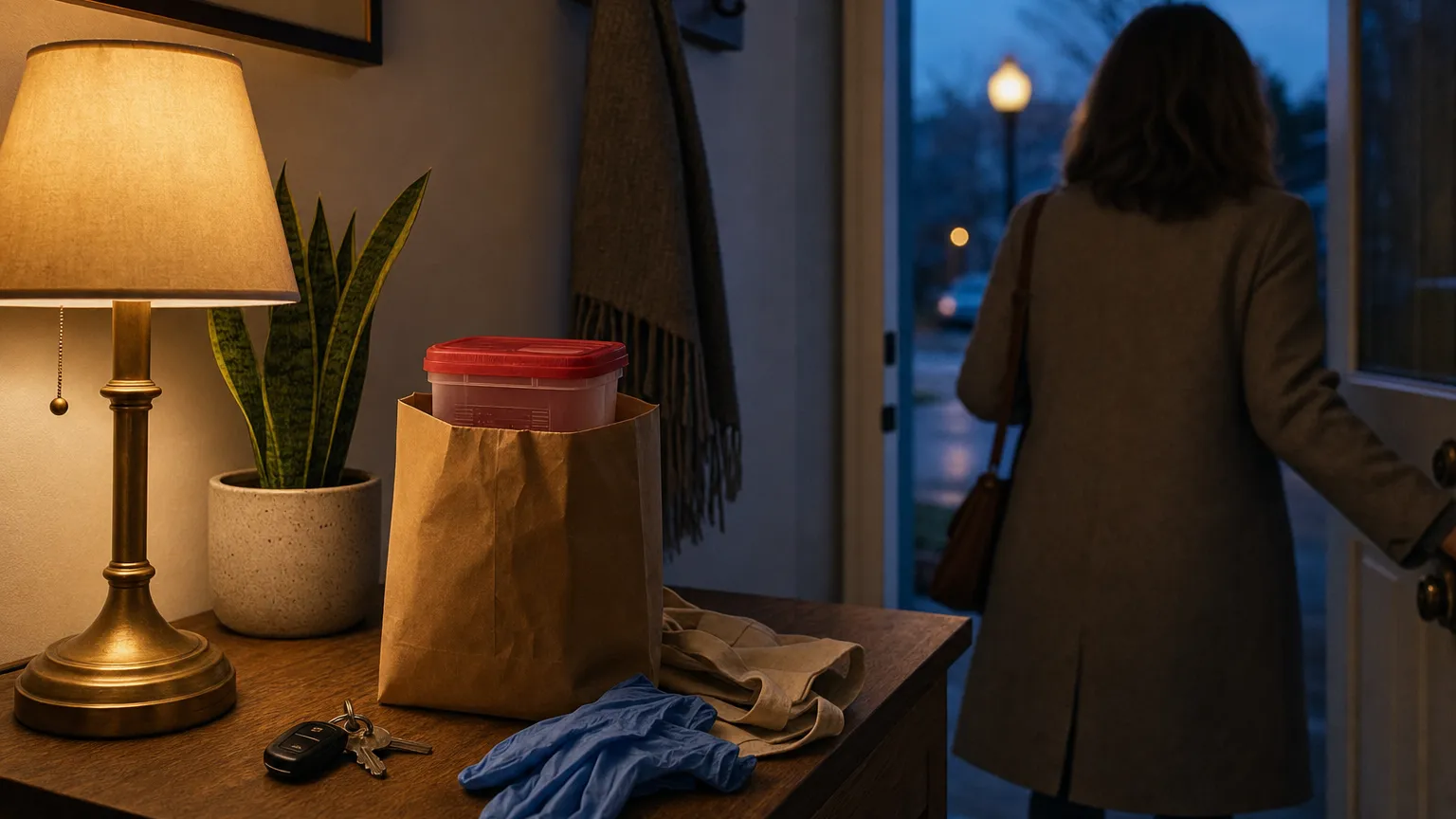
- Transport it upright and closed, ideally in a bag or box, and hand it over in person or follow the drop box instructions.
- For mail-back containers, follow the manufacturer’s packing and shipping instructions exactly.[1]
- Start a new container right away. Never reuse the old one.[1]
State and local rules
There is no single national rule for household sharps. FDA tells consumers to check with their local trash service or health department, and points to Safe Needle Disposal (1-800-643-1643, safeneedledisposal.org) for state-specific help on approved containers, local programs, labeling and whether containers may go in household trash.[1]
Example: California. Since September 1, 2008, home-generated sharps waste cannot be thrown in trash or recycling containers in California, and it must be transported in a sharps or other approved container to a permitted site, such as a household hazardous waste facility.[5]
Other states and cities allow a sealed, labeled container in household trash. Rules change, so check your own county before you assume either way.
Do and don’t checklist
| Do | Don’t |
|---|---|
| Use a sharps container every time[1] | Put loose needles in trash or recycling[3] |
| Seal it at three-quarters full[1] | Flush sharps down the toilet[3] |
| Check your local disposal rules[1] | Reuse a sharps container[1] |
| Keep it away from kids and pets[1] | Recap a used needle unless no container is available[4][6] |
| Carry a travel container when away[1] | Put a sharps container in the recycling bin |
What about vials, swabs and packaging?
- Empty or expired vials and leftover medication: follow your product’s instructions or ask your pharmacist. Many communities have drug take-back sites for unused medicines.
- Used alcohol pads, gauze and wrappers usually go in household trash unless soaked with blood; check local guidance.
- Pens with built-in needles count as sharps; the whole pen goes in the container.
Expert injection guidance notes that improper sharps disposal creates a real risk of blood-borne infection for family members, waste workers and the public.[7]
Traveling with used needles
FDA advises carrying a travel-size sharps container.[1] TSA allows used syringes in carry-on and checked bags when they are in a sharps disposal container or similar hard-surface container.[8] See traveling with peptides for packing and screening tips.