Quick answer: the most common GLP-1 side effects are stomach-related: nausea, diarrhea, vomiting and constipation. In the trials behind the labels, nausea affected 44% of adults on Wegovy 2.4 mg and 25% to 29% on Zepbound, versus 8% to 16% on placebo, and was lower on the diabetes versions, Ozempic (16% to 20%) and Mounjaro (12% to 18%).[1][2][3][4] Most of these effects are mild to moderate and fade with time, but a few rarer problems need prompt care.
This page is our hub for GLP-1 side effects. It gives the label numbers for each drug, then sends you to a detailed guide for each problem. For background on the drugs themselves, see our semaglutide profile, tirzepatide profile and the GLP-1 basics hub.
GLP-1 side effect rates by drug
These are the adverse reactions reported in the main placebo-controlled trials in each U.S. label. Placebo rates are in brackets.
| Side effect | Wegovy 2.4 mg | Zepbound 5 / 10 / 15 mg | Ozempic 0.5 / 1 mg | Mounjaro 5 / 10 / 15 mg |
|---|---|---|---|---|
| Nausea | 44% (16%) | 25 / 29 / 28% (8%) | 15.8 / 20.3% (6.1%) | 12 / 15 / 18% (4%) |
| Diarrhea | 30% (16%) | 19 / 21 / 23% (8%) | 8.5 / 8.8% (1.9%) | 12 / 13 / 17% (9%) |
| Vomiting | 24% (6%) | 8 / 11 / 13% (2%) | 5.0 / 9.2% (2.3%) | 5 / 5 / 9% (2%) |
| Constipation | 24% (11%) | 17 / 14 / 11% (5%) | 5.0 / 3.1% (1.5%) | 6 / 6 / 7% (1%) |
| Abdominal pain | 20% (10%) | 9 / 9 / 10% (5%) | 7.3 / 5.7% (4.6%) | 6 / 5 / 5% (4%) |
| Fatigue | 11% (5%) | 5 / 6 / 7% (3%) | Not in main table | Not in main table |
| Hair loss | 3% (1%) | 5 / 4 / 5% (1%) | Not in main table | Not in main table |
| Burping | 7% (under 1%) | 4 / 5 / 5% (1%) | Not in main table | Not in main table |
Sources: the Wegovy, Zepbound, Ozempic and Mounjaro prescribing information.[1][2][3][4]
Two cautions when reading this table. First, the trials differ in length, population and placebo rates, so the columns are not a head-to-head comparison. Second, Ozempic and Mounjaro were tested in people with type 2 diabetes at lower doses, which partly explains their lower numbers. The newer Wegovy 7.2 mg dose had nausea in 39% and vomiting in 22% of people, compared with 35% and 16% on 2.4 mg in the same trials.[1]
When side effects start and how long they last
Stomach side effects usually show up in the first weeks and again after each dose increase. In a pooled analysis of the STEP trials, 98.1% of gastrointestinal events on semaglutide 2.4 mg were mild to moderate, most were transient, and only 4.3% of people stopped treatment because of them.[5] The same analysis found weight loss was about the same whether or not people had stomach side effects, so feeling sick is not a sign the drug is “working better.”[5]
In the Wegovy trials, 6.8% of people on the drug and 3.2% on placebo stopped because of side effects, most often nausea, vomiting or diarrhea.[1]
Every GLP-1 side effect, with our detailed guides
| Side effect | What the labels say | Our guide |
|---|---|---|
| Nausea and vomiting | Most common; peaks after dose increases | GLP-1 nausea |
| Heartburn and reflux | Reflux in 5% on Wegovy vs 3% on placebo[1] | Semaglutide heartburn |
| Sulfur burps | Burping in 7% on Wegovy, 4% to 5% on Zepbound | Mounjaro sulfur burps |
| Bad breath | Not a labeled reaction; causes are not well studied | Ozempic breath |
| Fatigue | 11% on Wegovy, 5% to 7% on Zepbound | GLP-1 fatigue |
| Headaches | 14% on Wegovy vs 10% on placebo[1] | GLP-1 headaches |
| Hair loss | 3% to 5%, more often in women; tied to weight loss | GLP-1 hair loss |
| Skin sensitivity | Altered skin sensation (dysesthesia) is listed; more common at Wegovy 7.2 mg[1] | Mounjaro skin sensitivity |
| Facial volume loss | A result of fast weight loss, not a labeled reaction | Ozempic face |
| Muscle loss | Part of the weight lost is lean mass | GLP-1 muscle loss |
| Gallbladder problems | Gallstones in 1.6% on Wegovy vs 0.7% on placebo[1] | GLP-1 gallbladder |
| Diverticulitis | Studied in observational data; not a labeled warning | GLP-1 diverticulitis |
| Eye problems | Diabetic retinopathy complications warning for people with diabetes | GLP-1 eye health |
| Mood changes | Suicide warning removed in 2026 after FDA review[6] | GLP-1 depression and suicidal thoughts |
Who is more likely to get side effects
The labels point to a few patterns worth knowing before you start:
- Higher doses. Stomach side effects rise with dose for both drugs. On Mounjaro, nausea went from 12% at 5 mg to 18% at 15 mg, and on Wegovy, vomiting was more common at 7.2 mg than at 2.4 mg.[4][1]
- Women and hair loss. In the Zepbound weight trials, 7.1% of women reported hair loss compared with 0.5% of men.[2]
- Teenagers and gallstones. In a Wegovy trial of adolescents aged 12 and older, gallstones were reported in 3.8% on the drug versus none on placebo, a higher rate than in adults.[1]
- People on insulin or sulfonylureas. In a Wegovy trial in adults with type 2 diabetes, significant low blood sugar occurred in 6.2% on the drug versus 2.5% on placebo.[1]
- People losing weight fast. The labels tie gallbladder events and hair loss to weight reduction itself, which is why a rapid drop deserves attention.[1][2]
Side effects are not a reason to assume a drug won’t suit you. Many people who feel unwell early on settle once they reach a stable dose.[5]
How to manage common side effects: a checklist
Your prescriber is the right person to adjust the plan, but these steps follow the labels and common clinical practice:
- Eat smaller meals and stop at the first sign of fullness. GLP-1 drugs slow stomach emptying, so a large meal sits longer.[1][2]
- Go easy on greasy, fried and very sweet foods, especially in the days after your injection. Our GLP-1 diet guide covers what to eat.
- Drink steadily through the day. Vomiting and diarrhea can cause dehydration, and the labels warn about kidney injury from fluid loss.[1]
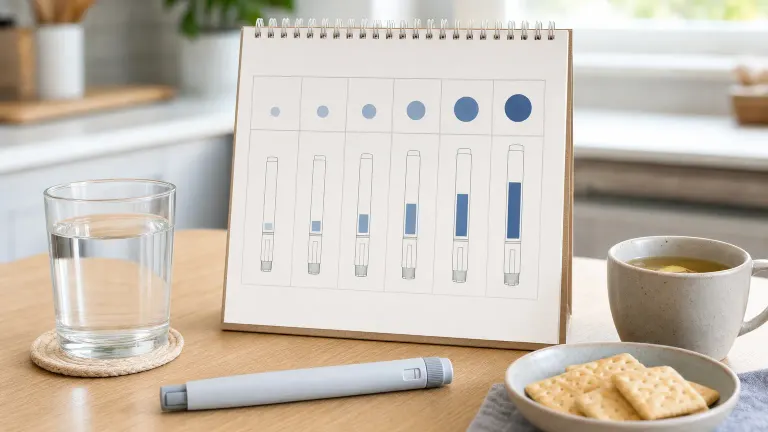
- Ask about slowing the dose increase. The Wegovy label says that if you don’t tolerate a dose during escalation, your prescriber can consider delaying the next step by 4 weeks.[1]
- Protect muscle and hair with enough protein and regular strength training.
- Tell every surgeon and anesthetist you take a GLP-1. Rare cases of food in the stomach during anesthesia have been reported.[1][2] See GLP-1 before surgery.
- Check your other medicines. If you also take insulin or a sulfonylurea, the risk of low blood sugar rises and doses may need lowering.[1][4] Zepbound can also make birth control pills less reliable after you start or increase the dose.[2]
Serious side effects: when to get help
Call your clinician or seek urgent care for:
- Severe belly pain that won’t go away, sometimes spreading to the back, with or without vomiting. This can signal pancreatitis. In the Zepbound weight trials, 0.2% of people had confirmed acute pancreatitis.[2]
- Pain under the right ribs, fever, yellow skin or eyes, or pale stools, which can signal gallbladder disease.[1][2]
- Vomiting or diarrhea that stops you keeping fluids down, or very little urine.[1]
- A lump or swelling in the neck, hoarseness or trouble swallowing. All four drugs carry a boxed warning about thyroid C-cell tumors seen in rodents; whether this happens in humans is unknown.[1][2][3][4]
- Vision changes, especially if you have diabetic retinopathy.[3]
- Swelling of the face or throat, a rash or trouble breathing (allergic reaction).
- New or worsening low mood or thoughts of self-harm. FDA’s 2026 review found no increased risk, but these symptoms always deserve attention.[6]
If side effects make you want to quit, talk to your prescriber first. Weight usually returns after stopping; our guide to stopping GLP-1 medication explains what to expect, and GLP-1 alternatives covers other options.