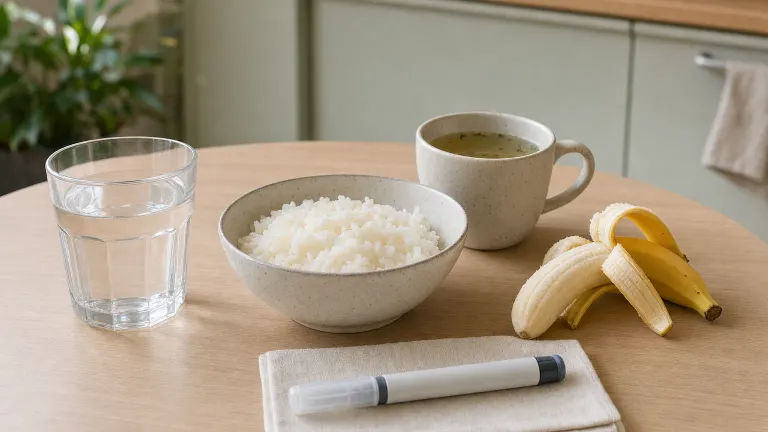
Quick answer: GLP-1 headaches are a listed but usually mild side effect. In Wegovy’s weight-loss trials, 14% of adults on 2.4 mg reported headache versus 10% on placebo, while headache was not listed among side effects more common than placebo in Zepbound’s weight-loss trials.[1][2] Most headaches on these drugs are likely driven by dehydration, eating much less, or low blood sugar, rather than a direct effect on the brain.[3]
This guide covers the label data, the likely causes, practical relief and the warning signs that need medical care. For background on how these drugs work, see our GLP-1 basics hub and the semaglutide profile.
How common are headaches on GLP-1 drugs?
| Drug and trial | Headache on drug | Placebo |
|---|---|---|
| Wegovy 2.4 mg, adults (weight loss) | 14% | 10% |
| Wegovy 7.2 mg trials: 2.4 mg / 7.2 mg arms | 8% / 9% | 7% |
| Wegovy 2.4 mg, ages 12 and older | 17% | 16% |
| Zepbound 5-15 mg, adults (weight loss) | Not listed as more common than placebo | — |
| Mounjaro 5-15 mg, type 2 diabetes | Not in the table of side effects at 5% or more | — |
Sources: Wegovy, Zepbound and Mounjaro labels.[1][2][6]
Two things stand out. First, headaches were common in the placebo groups too, so many headaches people notice on treatment would have happened anyway. Second, the extra risk on the drug is a few percentage points at most. Dizziness, which often travels with headache, was reported by 8% on Wegovy 2.4 mg versus 4% on placebo, and 4% to 5% on Zepbound versus 2%.[1][2]
Why GLP-1 drugs can cause headaches
The labels list headache but do not explain it. A 2025 review of headache and GLP-1 drugs described headache as a possible side effect while noting the drugs are also being studied as a headache treatment.[3] The most plausible everyday causes are:
Dehydration
Nausea, vomiting and diarrhea are the most common side effects of these drugs, and a smaller appetite can mean drinking less. The Wegovy label warns that fluid loss from stomach side effects has caused kidney injury in some people, which shows how real dehydration can be on these drugs.[1] Even mild dehydration can bring on a headache. See our guide to GLP-1 nausea.
Eating much less, or skipping meals
A sharp drop in food intake, long gaps between meals and very low carbohydrate intake can all trigger headaches in some people. This tends to be worst in the first weeks and after each dose increase, when appetite drops the most. Fatigue often comes along with it; see GLP-1 fatigue.
Low blood sugar
People with type 2 diabetes who also take insulin or a sulfonylurea have a higher risk of hypoglycemia on a GLP-1. In a Wegovy trial in people with type 2 diabetes, low blood sugar was reported in 6% on the drug versus 2% on placebo. Headache, shakiness, sweating and confusion can be signs.[1]
Caffeine and alcohol changes
Cutting back on coffee because it upsets your stomach can cause caffeine-withdrawal headaches. Alcohol can worsen dehydration; see GLP-1s and alcohol.
How to relieve and prevent GLP-1 headaches
These steps target the likely triggers. Your clinician or pharmacist can advise on what is right for you.
- Drink fluids steadily through the day, more if you have diarrhea or vomiting.
- Eat small, regular meals even when not hungry, with some protein and complex carbohydrates.
- Keep caffeine consistent rather than stopping suddenly.
- Check blood sugar if you have diabetes and take insulin or a sulfonylurea, and ask whether those doses should change.[1]
- Ask about pain relief. A pharmacist can help you choose an over-the-counter option that fits your other conditions and medicines.
- Talk about the dose schedule. If side effects pile up during escalation, Wegovy’s label lets a clinician delay the next dose increase by 4 weeks.[1]
Can GLP-1 drugs actually help headaches?
Early research suggests they might, in some people. GLP-1 drugs lower pressure in the fluid around the brain, and a 2024 systematic review found they were beneficial in people with idiopathic intracranial hypertension, a condition that causes headaches and is linked to obesity.[4] In a small 2025 open-label pilot study, 31 people with obesity and hard-to-treat migraine took liraglutide 1.2 mg daily; their monthly headache days fell from an average of 19.8 to 10.7 over 12 weeks, with little change in weight.[5] Without a placebo group, these results are preliminary. Liraglutide is covered in our liraglutide profile.
Headaches in teenagers on Wegovy
Wegovy is also used in people aged 12 and older. In the adolescent trial, headache was common in both groups (17% on Wegovy versus 16% on placebo), so the drug added little measurable risk.[1] Parents should still watch for headaches linked to vomiting, skipped meals or low fluid intake, which teenagers may not mention.
Keeping a headache diary
If headaches keep coming back, a simple diary can help you and your clinician spot a pattern. Note the day of your injection, what and when you ate, how much you drank, caffeine and alcohol, sleep, and any nausea or vomiting. Headaches that cluster a day or two after each injection, or on days you barely eat, point toward the triggers above rather than a new problem.
When to talk to your clinician
Contact your prescriber if headaches are frequent, getting worse, wake you from sleep, or come with dizziness, fainting, or signs of dehydration such as very dark urine. These may mean you need help with fluids, food intake, blood sugar or your dose. If you have surgery coming up, also read stopping GLP-1s before surgery.
This article is general information. Your clinician sets your dose and can help pin down the cause of new headaches.