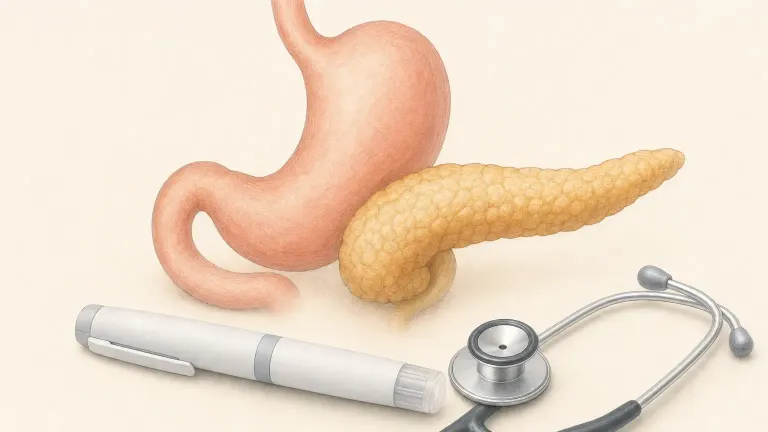
Quick answer: GLP-1 gallbladder risk is real but modest: these drugs slightly raise the chance of gallstones and gallbladder inflammation. In Wegovy’s weight-loss trials, gallstones (cholelithiasis) occurred in 1.6% of people on the drug versus 0.7% on placebo, and a 2022 meta-analysis of 76 trials found a 37% higher relative risk of gallbladder or bile duct disease with GLP-1 drugs.[1][4] Having had your gallbladder removed is not a listed reason to avoid them.
This guide covers the label warnings, what larger studies found, symptoms to watch for, and what to know if you no longer have a gallbladder. For background, see our GLP-1 basics hub and the semaglutide and tirzepatide profiles.
What the labels say about gallbladder disease
All the major GLP-1 labels carry a warning for acute gallbladder disease.[1][2][3]
| Drug and trials | Gallstones on drug | Placebo | Gallbladder inflammation (cholecystitis) |
|---|---|---|---|
| Wegovy injection, adults | 1.6% | 0.7% | 0.6% vs 0.2% |
| Wegovy tablets, adults | 2.5% | 1% | Not reported separately |
| Wegovy injection, ages 12+ | 3.8% | 0% | 0.8% vs 0% |
| Zepbound, adults | 1.1% | 1% | 0.7% vs 0.2% |
| Ozempic 0.5 / 1 mg, type 2 diabetes | 1.5% / 0.4% | 0% | Not reported separately |
Sources: Wegovy, Zepbound and Ozempic labels.[1][2][3]
In Zepbound’s trials, gallbladder removal (cholecystectomy) was reported in 0.2% on the drug and in no one on placebo.[2]
The Wegovy label makes an important point: rapid weight loss itself raises gallstone risk, but gallbladder disease was still more common on Wegovy than on placebo even after accounting for the amount of weight lost.[1] The Zepbound label says its gallbladder events were associated with weight reduction.[2]
What larger studies found
Meta-analysis of 76 trials (2022)
A meta-analysis in JAMA Internal Medicine pooled 76 randomized trials with 103,371 people.[4]
- GLP-1 drugs were linked to a higher risk of gallbladder or bile duct disease overall (relative risk 1.37).
- Risk was higher in weight-loss trials (relative risk 2.29) than in diabetes and other trials (1.27).
- Risk was higher with higher doses and longer use.
Meta-analysis of 55 trials (2025)
A 2025 meta-analysis in Gastroenterology of 55 placebo-controlled trials (106,395 people) found GLP-1 drugs increased gallstones by a relative risk of 1.46, which works out to about 2 more cases per 1,000 people. The drugs probably had little or no effect on cholecystitis, cholangitis and most other biliary events.[5]
Real-world studies
Results from health-record studies are mixed. A 2023 study comparing GLP-1 drugs with bupropion-naltrexone for weight loss found no statistically significant increase in biliary disease (hazard ratio 1.50, confidence interval 0.89 to 2.53), though it did find higher risks of pancreatitis, bowel obstruction and gastroparesis.[6] A large 2026 study in people with type 2 diabetes found no significant difference in cholecystitis or gallbladder removal rates between GLP-1 drugs and oral diabetes medicines.[7]
Why GLP-1 drugs may raise gallstone risk
Two explanations are commonly proposed:
- Rapid weight loss. When the body breaks down a lot of fat quickly, the liver releases more cholesterol into bile, which can form stones. This happens with very-low-calorie diets and bariatric surgery too.
- Slower gallbladder emptying. GLP-1 drugs slow parts of the digestive system. Bile that sits longer in the gallbladder is more likely to form sludge and stones.
The finding that risk rises with dose and duration fits both ideas.[4]
Gallbladder symptoms to watch for
The Wegovy patient information tells people to call their healthcare provider for:[1]
- Pain in the upper stomach (abdomen)
- Yellowing of the skin or eyes (jaundice)
- Fever
- Clay-colored stools
Gallbladder pain is often felt in the upper right belly and may follow a fatty meal. Severe belly pain that spreads to the back can also signal pancreatitis, which gallstones can trigger. Seek care promptly for these symptoms. Some overlap with ordinary side effects, so see our GLP-1 nausea guide for what is typical.
Using Ozempic or Wegovy after gallbladder removal
Neither the Ozempic, Wegovy nor Zepbound label lists past gallbladder removal as a reason not to use the drug.[1][2][3] Practical points to discuss with your prescriber:
- Gallbladder stones are no longer possible, since there is no gallbladder. That removes the most common gallbladder event seen in trials.
- Bile duct stones can still occur after gallbladder removal, and so can pancreatitis. The labels’ warnings about pancreatitis still apply.[1]
- Digestive side effects may overlap. Some people have looser stools after gallbladder removal, and diarrhea is also a common GLP-1 side effect. Tell your clinician if bowel changes are severe or persistent.
- Report new upper belly pain, jaundice or fever quickly, as you would on any GLP-1.
There is little trial data focused specifically on people without a gallbladder, so decisions are individual.
Semaglutide vs tirzepatide for the gallbladder
Both drugs carry the same class warning. The label numbers look slightly different (gallstones in 1.6% on Wegovy versus 1.1% on Zepbound), but the trials enrolled different people for different lengths of time, so the figures cannot be used to rank the drugs.[1][2] For a broader comparison, see semaglutide vs tirzepatide.
Does stopping the drug lower the risk?
There are no trials testing whether pausing or stopping a GLP-1 drug lowers gallstone risk once stones have formed. Gallstones that cause repeated pain or inflammation are usually treated on their own merits, often by removing the gallbladder. Talk with your clinician about whether to continue treatment after a gallbladder episode.
Lowering your risk
No strategy has been proven to prevent GLP-1-related gallstones, but sensible steps include following the prescribed dose escalation rather than speeding it up, not combining the drug with a crash diet, and reporting symptoms early. If you have a history of gallstones, tell your prescriber before starting. If you are planning gallbladder or other surgery, read stopping GLP-1s before surgery. For bowel-related concerns, see GLP-1s and diverticulitis.
This article is general information. Your clinician can weigh your personal gallbladder history against the benefits of treatment.