Quick answer: GLP-1 diarrhea is common, especially early on. It affected 30% of adults on Wegovy 2.4 mg (16% on placebo) and 19% to 23% on Zepbound (8% on placebo).[1][2] Episodes are usually short, with a median of 3 days in the semaglutide STEP trials, and they cluster in the first weeks and after each dose increase.[5] Fluids, simple food choices and a slower dose increase help most people.[6]
This guide is part of our GLP-1 basics hub. For every side effect side by side, see the GLP-1 side effects guide.
How common is diarrhea on each GLP-1?
| Drug and dose | Diarrhea | Placebo |
|---|---|---|
| Wegovy 2.4 mg (weight loss) | 30% | 16% |
| Zepbound 5 / 10 / 15 mg (weight loss) | 19% / 21% / 23% | 8% |
| Ozempic 0.5 / 1 mg (diabetes) | 8.5% / 8.8% | 1.9% |
| Mounjaro 5 / 10 / 15 mg (diabetes) | 12% / 13% / 17% | 9% |
Sources: Wegovy, Zepbound, Ozempic and Mounjaro prescribing information.[1][2][3][4]
Two patterns are worth noting. Diarrhea rises with dose on tirzepatide, from 19% to 23% on Zepbound and from 12% to 17% on Mounjaro.[2][4] And the weight-loss versions cause more of it than the diabetes versions, partly because of higher doses and different trial groups. The rows come from different trials, so they are not a head-to-head comparison.
Why GLP-1 drugs cause diarrhea
GLP-1 drugs act on receptors throughout the gut. They slow stomach emptying, which is why nausea and constipation are common. Their effects further down the gut are less well understood. The STEP authors noted that changes in lower-gut transit may explain both constipation and diarrhea, though the evidence is limited.[5]
An expert consensus also observed that long-acting GLP-1 drugs, the once-weekly kind, have been linked with less nausea and vomiting but more diarrhea than short-acting ones.[6]
Common triggers that make it worse:[6]
- large, fatty or rich meals
- sugar alcohols such as sorbitol, mannitol, xylitol and maltitol, found in sugar-free sweets and gum
- coffee, alcohol, soft drinks and dairy for some people
- metformin, which causes diarrhea on its own and may add to GLP-1 diarrhea
How long does GLP-1 diarrhea last?
In the STEP 1 to 3 trials of semaglutide 2.4 mg, the median diarrhea episode lasted 3 days, similar to placebo.[5] The expert consensus describes diarrhea as starting in the first 4 weeks of treatment, after which it becomes much less frequent.[6]
Both tirzepatide labels say most nausea, vomiting and diarrhea occurred during dose escalation and decreased over time.[2][4] In the SURMOUNT-1 to -4 trials, people who needed anti-diarrhea medicine most often started it during dose escalation.[7]
So a typical pattern is a few loose days after starting or stepping up, then settling. If diarrhea goes on for weeks, or comes back every week after the injection, talk to your prescriber.
Mounjaro, Zepbound and Ozempic diarrhea
- Mounjaro and Zepbound (tirzepatide): diarrhea in 12% to 17% of people with type 2 diabetes and 19% to 23% of people in weight-loss trials.[2][4]
- Ozempic and Wegovy (semaglutide): diarrhea in about 9% of people with type 2 diabetes and 30% at the Wegovy weight-loss dose.[1][3]
Stopping treatment because of diarrhea was uncommon: 0.7% on Wegovy versus 0.1% on placebo.[1]
Does diarrhea mean you lose more weight?
Not in any meaningful way. In the SURMOUNT-1 to -4 trials, weight loss on tirzepatide was similar whether people had no nausea, nausea alone, or any nausea, vomiting or diarrhea; the authors estimated these side effects (plus indigestion) were associated with up to 3.1% of the total weight reduction.[7] In the semaglutide STEP trials, they explained less than 1 percentage point of the extra weight loss.[5] Weight lost through fluid loss is not the goal, so diarrhea is worth treating rather than tolerating.
How to get relief from GLP-1 diarrhea
The 2022 expert consensus on managing GLP-1 stomach side effects suggests:[6]
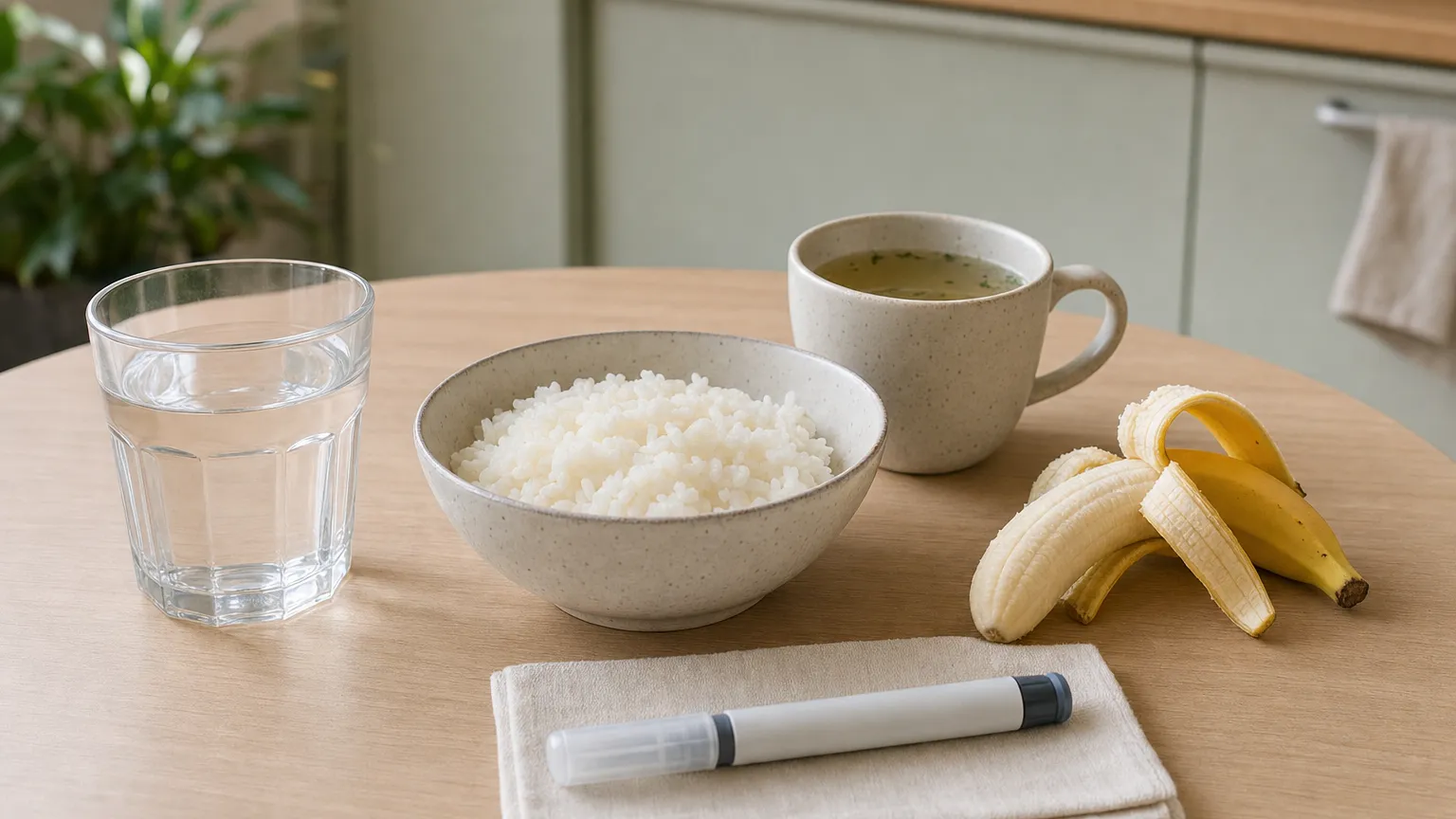
- Drink generously. Replace lost fluid with water and other clear drinks through the day. The consensus advises against sports drinks.
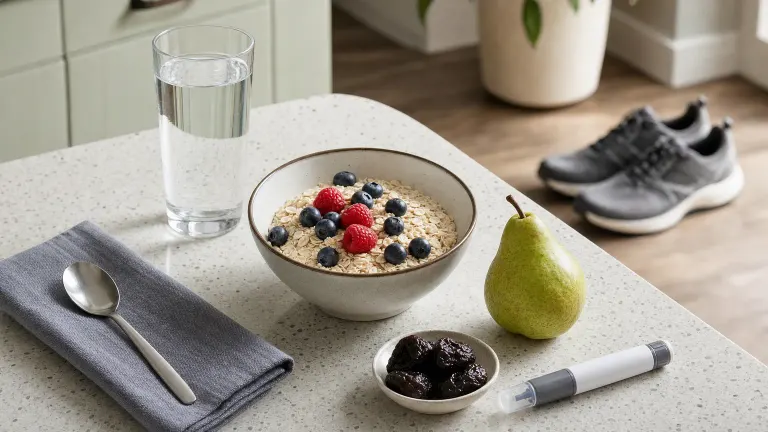
- Eat simple foods. Broth, plain rice, carrots and very ripe fruit without skin are easier on the gut.
- Temporarily cut back on high-fiber foods such as whole grains, seeds, beans, lentils, cabbage and fruit with skins. Add them back gradually once symptoms improve.
- Avoid triggers: sugar alcohols, dairy, coffee, alcohol, soft drinks, very hot or very cold foods.
- Eat smaller meals and stop when you feel full.
For repeated episodes, the consensus describes ruling out infection or inflammation first, then a clinician prescribing loperamide until symptoms fade.[6] Ask your clinician or pharmacist before taking any antidiarrheal. Our GLP-1 diet guide and GLP-1 nausea guide have more food tips.
GLP-1 diarrhea and metformin
Many people with type 2 diabetes take metformin with Ozempic or Mounjaro. Metformin itself commonly causes diarrhea: 53% of people on immediate-release metformin had it in a US trial, versus 12% on placebo, and 10% on the extended-release form versus 3%.[8] The expert consensus notes that GLP-1 drugs may worsen diarrhea in people taking metformin.[6]
If you take both, ask your clinician whether the timing, form (extended-release) or dose of metformin could be adjusted. Do not stop either medicine on your own. Our guide to Mounjaro and metformin covers the combination in detail.
When to get medical care
Contact a clinician promptly or seek urgent care if diarrhea comes with:
- inability to keep fluids down, or very little urine
- dizziness or fainting
- blood in the stool or black stools
- fever
- severe or constant belly pain, especially pain spreading to your back, which can signal pancreatitis[1]
Severe stomach side effects were reported in 4.1% of people on Wegovy versus 0.9% on placebo, and in 1.7% to 3.1% on Zepbound versus 1% on placebo.[1][2]
Questions to ask your clinician
- Should I stay on my current dose longer before stepping up?
- Is an antidiarrheal safe for me, and how often can I use it?
- Should my metformin or other medicines be adjusted?
- How much fluid should I aim for, and when should I check my kidney function?
This guide is general information, not medical advice. Talk to a licensed clinician before changing your treatment.