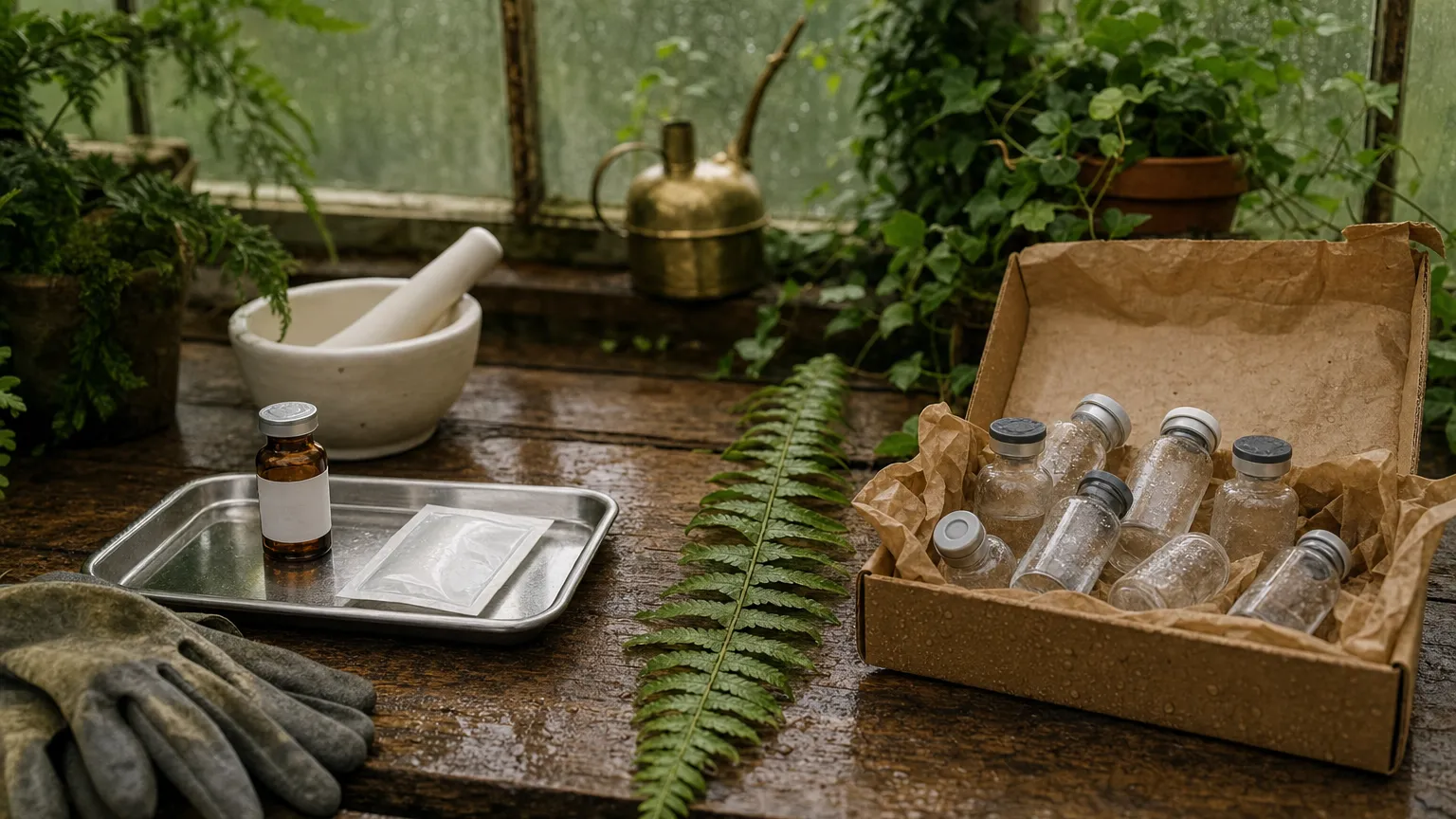
Compounded vs research grade peptides differ most in legal status and oversight. Compounded peptides are prepared by licensed pharmacies or FDA-registered outsourcing facilities for patients, under federal compounding law and state rules. Even so, FDA does not approve them or verify their quality before sale.[1] Research-grade peptides are sold as “research use only” and are not legal drugs for people. They have no regulatory quality controls for human use, and testing has found serious purity problems.[6][7][8]
This guide is part of our FDA and regulation hub. For background, see research use only peptides and 503A vs 503B compounding.
Compounded vs research grade at a glance
| Compounded (503A pharmacy or 503B outsourcing facility) | Research grade (“research use only”) | |
|---|---|---|
| Intended for | Patients, on a prescription or provider order[2][3] | Laboratory research, not people[6] |
| FDA-approved? | No[1] | No[7] |
| Who oversees it | State pharmacy boards (503A); FDA (503B)[1] | No regulator checks quality for human use |
| Manufacturing standard | CGMP for 503B; 503A exempt from CGMP but subject to insanitary-conditions rules[1] | None for human use |
| Ingredient rules | Bulk substances must qualify (monograph, approved-drug component or bulks list)[2][3] | None |
| Prescriber and pharmacist involved | Yes | No |
| Known quality problems | Contamination or wrong strength possible with poor practices[1] | Low purity and endotoxin found in testing[8] |
What “compounded” means legally
Compounding means a pharmacist or physician combines or alters ingredients to make a drug for a patient whose needs an approved drug can’t meet, such as someone allergic to a dye.[1] Federal law offers two routes:
- Section 503A: state-licensed pharmacies and physicians compound for an identified patient on a valid prescription. They are overseen mainly by state boards of pharmacy and are exempt from CGMP.[1][2]
- Section 503B: outsourcing facilities, created by the Drug Quality and Security Act of 2013, register with FDA, follow CGMP and are inspected on a risk-based schedule.[1][3]
Neither route makes a drug FDA-approved. FDA says poor compounding practices can lead to contamination or too much or too little active ingredient, which “can lead to serious patient injury and death.”[1] Our guide to 503A vs 503B compounding covers the details.
Which peptides can be compounded
Compounders can’t use any powder they like. Under Section 503A, a bulk ingredient must have a USP or NF monograph, be part of an approved drug, or be on the 503A bulks list.[2] While FDA builds that list, it tolerates Category 1 substances.[4]
- Category 1 (May 14, 2026 list): includes VIP, glutathione, NAD+ and GHK-Cu for non-injectable routes.[4]
- Category 2 (safety concerns): includes kisspeptin-10 under 503A and ipamorelin under 503B.[5]
- Nominated but withdrawn: BPC-157, TB-500, CJC-1295, thymosin alpha-1, epitalon and others. FDA still describes possible immune reactions from aggregation and peptide-related impurities, and limited human safety data, for these substances.[5]
Withdrawn substances are not in Category 1, so they are not compoundable under the interim policy. See BPC-157 legal status for one example in detail.
What “research grade” means legally
The phrase “For Research Use Only” comes from FDA rules for in vitro diagnostic products, such as lab test reagents (21 CFR 809.10(c)), not from drug law.[6] On a vial of injectable peptide, it is a seller’s disclaimer rather than a legal category. FDA has warned companies selling semaglutide, tirzepatide, retatrutide and other drugs falsely labeled “for research purposes” or “not for human consumption.”[7] When marketing shows a product is meant for people, FDA treats it as an unapproved drug. More detail is in research use only peptides and buying peptides online: legal risks.
Quality: what the evidence shows
There are no comparative trials of compounded vs research-grade peptides, but quality testing and FDA reports are telling:
- Research-grade purity: in a 2024 study of semaglutide sold online without a prescription, vials contained 29% to 39% more drug than labeled, measured purity was about 8% to 14% against a claimed 99%, and every sample contained bacterial endotoxin.[8]
- Counterfeits: FDA warns that counterfeit drugs may contain the wrong ingredient, too much or too little active ingredient, or none at all.[7]
- Compounded dosing errors: compounded products carry their own risks. FDA reported patients taking 5 to 20 times their intended dose of compounded semaglutide from multiple-dose vials, often from confusing units and milliliters.[9]
- Vial handling: FDA recommends discarding multiple-dose vials 28 days after first use because contamination risk rises after that.[7]
How to tell which one you’re being offered
A few features separate a compounded prescription from a research product:
- A prescription and a pharmacy label. A 503A product is dispensed for a named patient on a prescription, and an outsourcing facility’s products come from an FDA-registered facility.[1][2][3]
- Disclaimers instead of directions. “For research use only” or “not for human consumption” on a product marketed for weight loss, healing or anti-aging is a warning sign FDA has specifically called out.[7]
- A compoundable ingredient. If the peptide is on FDA’s withdrawn or Category 2 lists, a legitimate pharmacy shouldn’t be compounding it.[5]
- Who answers your questions. A compounding pharmacy has a licensed pharmacist you can call; a research-use product comes with no pharmacist or prescriber behind it.
Legal risk for buyers
The FDA warnings cited here were aimed at sellers. FDA actions on unapproved GLP-1 products, including those labeled “research use only,” are summarized in our FDA peptide compounding crackdown guide.[7] State laws vary. This is general information, not legal advice.
Cost and access
Compounded peptides require a prescription and a licensed pharmacy, and many peptides cannot legally be compounded at all.[4][5] Research-grade products are often cheaper and easier to get, which is part of the risk: lower prices come without the safeguards above.
Questions to ask your clinician
- Is there an FDA-approved drug for my condition? FDA says compounded drugs should be used only when an approved drug can’t meet the patient’s needs.[1]
- Is the ingredient legally compoundable, and under 503A or 503B?[2][4]
- Is the pharmacy licensed in my state, or is the facility registered with FDA?[1]
The verdict
Compounded peptides are a regulated, if imperfect, route: licensed professionals, ingredient rules and, for outsourcing facilities, manufacturing standards, but no FDA approval.[1] Research-grade peptides are not a legal source of drugs for people, and independent testing has found low purity and contamination.[7][8] Many popular peptides, including BPC-157, cannot currently be obtained legally through either route.[5]